


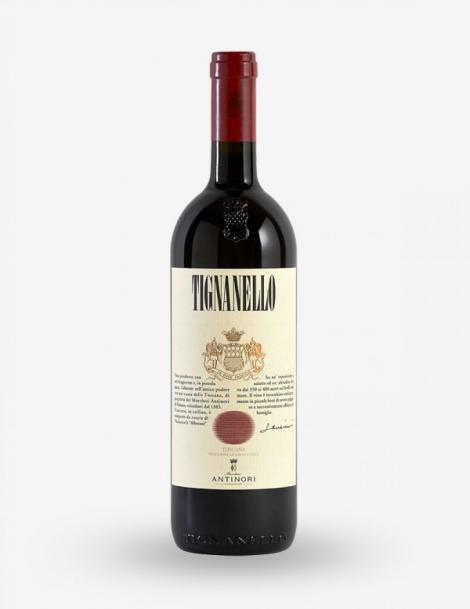
TOSCANA ROSSO IGT 2012 TIGNANELLO ANTINORI LT 0,750
TOSCANA ROSSO IGT 2012 TIGNANELLO ANTINORI LT 0,750
€ 340,00
Code
ANTINORI2
Alternative Code:
8001935124504
Goods Category:
Tuscany
Unit of Measurement:
NR
Vintage:
2012
Producer:
ANTINORI
Grape variety:
80% Sangiovese, 5% Cabernet Franc, 15% Cabernet Sauvignon
-
PRODUCT INFORMATION
Classification:
Toscana IGT
Blend:
80% Sangiovese, 15% Cabernet Sauvignon, 5% Cabernet
Franc
Climate:
After a mild and dry autumn, winter in the
Chianti Classico area was characterized by cold
temperatures and regular rainfall, especially in the months of January
and February. Spring began with rather dry and cool weather, so much so that budbreak and flowering
occurred slightly later than the average of previous years. The months of April and May
guaranteed good rainfall, which was crucial for coping with the long summer drought that,
starting in June and continuing through August,
affected plant development, both in the canopy
and in the size and weight of the bunches. The
rains of the last days of August rebalanced the
vineyards, allowing all varieties to continue their
ripening processes regularly. The months of September
and October, both mild and moderately rainy, allowed the
grapes to evolve in both sugar, technological, and phenolic ripeness. The
harvesting took place between September 20th and
October 10th, starting with Cabernet Franc and Sangiovese and concluding with Cabernet Sauvignon.
Winery:
The seasonal trend, particularly during the summer, required an intense and careful
selection of the grapes, both in the vineyard and in the cellar. This careful selection allowed us to give
added value to the Tignanello grapes, which, already unique in their typicity and
aptitude, produced wines of great character and structure.
During fermentation and maceration in conical tanks, the musts were vinified
with extreme attention to the freshness of the aromas, the extraction of color, and the management of the
tannins, aimed at achieving sweetness and elegance. Once the skins were separated from the wine, the
malolactic fermentation began in barriques, thus enhancing the finesse and pleasantness of the aromas.
Then the aging process began, lasting approximately 12-14 months, in French and Hungarian oak
barrels, some new and some new. During this period, the
different lots, vinified separately according to variety, aged in wood and were then
assembled a few months before bottling.
Historical data:
Tignanello is produced exclusively from the vineyard of the same name, located on a 57-hectare plot
facing southwest, of limestone origin with tuff elements, at an altitude between 350 and 400 meters
above sea level at the Tignanello Estate. It was the first Sangiovese to be aged in barrique, the
first modern red wine blended with non-traditional varieties, such as Cabernet, and among the first
red wines in Chianti not to use white grapes. Tignanello, originally called "Chianti Classico Riserva
Tignanello vineyard," was vinified for the first time from a single vineyard in the 1970 vintage,
when it contained 20% Canaiolo and 5% Trebbiano and Malvasia, and was aged in small
oak barrels. With the 1971 vintage, it became a Tuscan table wine and was called Tignanello.
With the 1975 vintage, the white grapes were completely eliminated. Since 1982, the composition has
remained the same as it is today. Tignanello is produced only in the best years; it was not produced in 1972, 1973, 1974, 1976, 1984, 1992, and 2002.
Tasting notes:
Tignanello 2012 is a very intense ruby ??red in color, with purple highlights. On the nose, it is powerful and
complex, with spicy notes mixed with red fruit, smoky notes, and balsamic notes;
hints of cherry, plum, licorice, and rosemary are also perceived. It is very elegant, filling the palate with great
volume and excellent tannic balance. It has a lingering finish, with spicy and fruity notes that blend well
with the oak notes.
Toscana IGT
Blend:
80% Sangiovese, 15% Cabernet Sauvignon, 5% Cabernet
Franc
Climate:
After a mild and dry autumn, winter in the
Chianti Classico area was characterized by cold
temperatures and regular rainfall, especially in the months of January
and February. Spring began with rather dry and cool weather, so much so that budbreak and flowering
occurred slightly later than the average of previous years. The months of April and May
guaranteed good rainfall, which was crucial for coping with the long summer drought that,
starting in June and continuing through August,
affected plant development, both in the canopy
and in the size and weight of the bunches. The
rains of the last days of August rebalanced the
vineyards, allowing all varieties to continue their
ripening processes regularly. The months of September
and October, both mild and moderately rainy, allowed the
grapes to evolve in both sugar, technological, and phenolic ripeness. The
harvesting took place between September 20th and
October 10th, starting with Cabernet Franc and Sangiovese and concluding with Cabernet Sauvignon.
Winery:
The seasonal trend, particularly during the summer, required an intense and careful
selection of the grapes, both in the vineyard and in the cellar. This careful selection allowed us to give
added value to the Tignanello grapes, which, already unique in their typicity and
aptitude, produced wines of great character and structure.
During fermentation and maceration in conical tanks, the musts were vinified
with extreme attention to the freshness of the aromas, the extraction of color, and the management of the
tannins, aimed at achieving sweetness and elegance. Once the skins were separated from the wine, the
malolactic fermentation began in barriques, thus enhancing the finesse and pleasantness of the aromas.
Then the aging process began, lasting approximately 12-14 months, in French and Hungarian oak
barrels, some new and some new. During this period, the
different lots, vinified separately according to variety, aged in wood and were then
assembled a few months before bottling.
Historical data:
Tignanello is produced exclusively from the vineyard of the same name, located on a 57-hectare plot
facing southwest, of limestone origin with tuff elements, at an altitude between 350 and 400 meters
above sea level at the Tignanello Estate. It was the first Sangiovese to be aged in barrique, the
first modern red wine blended with non-traditional varieties, such as Cabernet, and among the first
red wines in Chianti not to use white grapes. Tignanello, originally called "Chianti Classico Riserva
Tignanello vineyard," was vinified for the first time from a single vineyard in the 1970 vintage,
when it contained 20% Canaiolo and 5% Trebbiano and Malvasia, and was aged in small
oak barrels. With the 1971 vintage, it became a Tuscan table wine and was called Tignanello.
With the 1975 vintage, the white grapes were completely eliminated. Since 1982, the composition has
remained the same as it is today. Tignanello is produced only in the best years; it was not produced in 1972, 1973, 1974, 1976, 1984, 1992, and 2002.
Tasting notes:
Tignanello 2012 is a very intense ruby ??red in color, with purple highlights. On the nose, it is powerful and
complex, with spicy notes mixed with red fruit, smoky notes, and balsamic notes;
hints of cherry, plum, licorice, and rosemary are also perceived. It is very elegant, filling the palate with great
volume and excellent tannic balance. It has a lingering finish, with spicy and fruity notes that blend well
with the oak notes.
REVIEW THE PRODUCT
Login to read the reviews and write your own -- Proceed to LOGIN
RECENTLY VIEWED


