


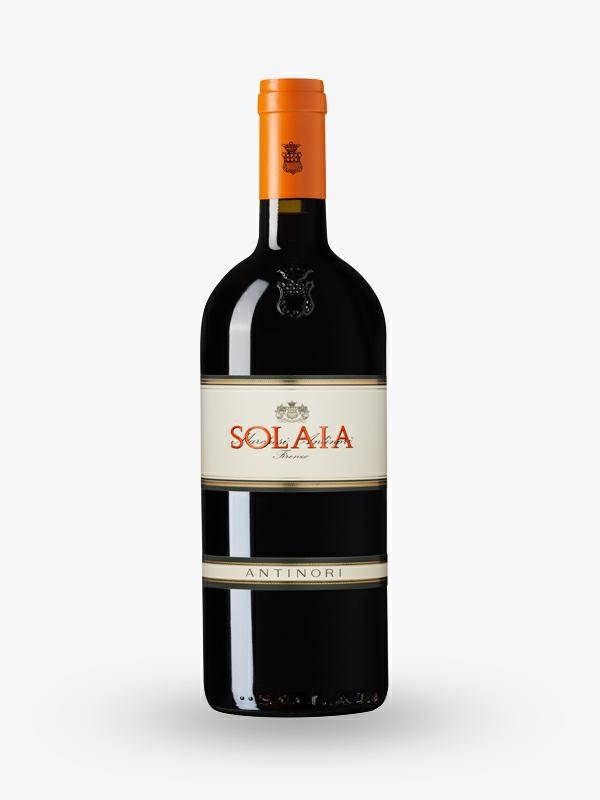
TOSCANA ROSSO IGT 2007 SOLAIA ANTINORI LT 0,750
TOSCANA ROSSO IGT 2007 SOLAIA ANTINORI LT 0,750
€ 590,00
Code
ANTINORI125
Alternative Code:
8881935144500
Goods Category:
Tuscany
Unit of Measurement:
NR
Vintage:
2007
Producer:
ANTINORI
Grape variety:
75% Cabernet Sauvignon,20% Sangiovese, 5% Cabernet Franc.
-
PRODUCT INFORMATION
Climate
The autumn and winter of 2009 in the Chianti Classico region were characterized by cold and rainy weather. Precipitation during the winter months provided the soil with a good water supply for the spring, which was mild and without sudden drops in temperatures, allowing for regular bud break. Summer began with a fairly rainy June and July, an exceptional situation in this area. Vegetation was prolonged,
but the small bunches formed and grew well, thanks also to the hot and dry August and the first ten days of September. The grapes from the Solaia vineyard reached full ripeness in September and October, which enjoyed ideal weather conditions; the sunny, warm days combined with significant temperature variations between day and night allowed for excellent but slow development of the berries, requiring several days for the Sangiovese and Cabernet Sauvignon grapes to mature. Harvesting was concentrated in the first twenty days of October. The quality of the grapes harvested and brought to the cellar was excellent, both in terms of health and quality, suggesting a remarkable vintage.
Total annual rainfall: 739 mm
Rainfall April 1 – October 31: 293 mm
Average temperature April 1 – October 31: 21.7 °C
Vinification
The favorable climatic conditions allowed the grapes to ripen uniformly and evenly, ensuring a harvest focused on enhancing the details and nuances of each parcel of the Solaia vineyard. After being tasted and evaluated, taking into account their development, the amount of color in the skin, and the ripeness of the pips, the grapes were carefully harvested by hand, separating the parcels based on all agronomic and technological variables.
Upon arrival at the winery, the grapes were delicately destemmed and carefully selected on the sorting table before being pressed. Attention to detail was paramount, and immature grapes were discarded so that only perfectly ripe ones entered the vinification tank. During fermentation and maceration in the truncated cone-shaped tanks, the must slowly transformed into wine, allowing the freshness of the aromas, the extraction of color, and the tannins to express themselves to their fullest. All this requires great sensitivity, knowledge of the grapes, and constant care of the product, which was only racked after careful daily tastings. Once the skins were separated from the wine, malolactic fermentation began in barriques, enhancing the wine's finesse and pleasantness. The aging process then began, lasting approximately 18 months in French oak barrels. During this period, the different lots, vinified separately based on the varietal and viticultural variables, reached their peak expression and were then blended a few months before bottling.
Historical Data
Solaia is a vineyard of approximately 20 hectares with southwest exposure, located at 350 to 400 meters above sea level on rocky limestone soils of alberese and galestro rock, located at Tenuta Tignanello. The Antinori family produced this wine for the first time in the 1978 vintage; the initial blend was 80% Cabernet Sauvignon and 20% Cabernet Franc, a formula repeated in 1979. In subsequent vintages, 20% Sangiovese was introduced and some adjustments were made to the ratio of Cabernet Sauvignon to Cabernet Franc, resulting in the current blend. Solaia is produced only in exceptional vintages and was not produced in 1980, 1981, 1983, 1984, and 1992.
Tasting Notes
Solaia 2009 has an intense ruby ??red color. The smoothness on the palate is the result of perfectly ripe grapes, followed by notes of coffee, chocolate, mint, and licorice. It is a complex wine, with great structure, finesse, and elegance, with soft, velvety tannins.
Vintage Awards
I Vini Di Veronelli 2013
Super Three Stars
Italy
Italian Sommelier Association "Duemilavini 2013" Guide
5 Grappoli
Italy
L. Maroni Yearbook
90/100
Italy
Wine Spectator
95/100
USA
Wine Enthusiast
97/100 + Cellar Selection
USA
Wine Advocate
96+/100
USA
Antonio Galloni
96+/100
USA
Vinum
The autumn and winter of 2009 in the Chianti Classico region were characterized by cold and rainy weather. Precipitation during the winter months provided the soil with a good water supply for the spring, which was mild and without sudden drops in temperatures, allowing for regular bud break. Summer began with a fairly rainy June and July, an exceptional situation in this area. Vegetation was prolonged,
but the small bunches formed and grew well, thanks also to the hot and dry August and the first ten days of September. The grapes from the Solaia vineyard reached full ripeness in September and October, which enjoyed ideal weather conditions; the sunny, warm days combined with significant temperature variations between day and night allowed for excellent but slow development of the berries, requiring several days for the Sangiovese and Cabernet Sauvignon grapes to mature. Harvesting was concentrated in the first twenty days of October. The quality of the grapes harvested and brought to the cellar was excellent, both in terms of health and quality, suggesting a remarkable vintage.
Total annual rainfall: 739 mm
Rainfall April 1 – October 31: 293 mm
Average temperature April 1 – October 31: 21.7 °C
Vinification
The favorable climatic conditions allowed the grapes to ripen uniformly and evenly, ensuring a harvest focused on enhancing the details and nuances of each parcel of the Solaia vineyard. After being tasted and evaluated, taking into account their development, the amount of color in the skin, and the ripeness of the pips, the grapes were carefully harvested by hand, separating the parcels based on all agronomic and technological variables.
Upon arrival at the winery, the grapes were delicately destemmed and carefully selected on the sorting table before being pressed. Attention to detail was paramount, and immature grapes were discarded so that only perfectly ripe ones entered the vinification tank. During fermentation and maceration in the truncated cone-shaped tanks, the must slowly transformed into wine, allowing the freshness of the aromas, the extraction of color, and the tannins to express themselves to their fullest. All this requires great sensitivity, knowledge of the grapes, and constant care of the product, which was only racked after careful daily tastings. Once the skins were separated from the wine, malolactic fermentation began in barriques, enhancing the wine's finesse and pleasantness. The aging process then began, lasting approximately 18 months in French oak barrels. During this period, the different lots, vinified separately based on the varietal and viticultural variables, reached their peak expression and were then blended a few months before bottling.
Historical Data
Solaia is a vineyard of approximately 20 hectares with southwest exposure, located at 350 to 400 meters above sea level on rocky limestone soils of alberese and galestro rock, located at Tenuta Tignanello. The Antinori family produced this wine for the first time in the 1978 vintage; the initial blend was 80% Cabernet Sauvignon and 20% Cabernet Franc, a formula repeated in 1979. In subsequent vintages, 20% Sangiovese was introduced and some adjustments were made to the ratio of Cabernet Sauvignon to Cabernet Franc, resulting in the current blend. Solaia is produced only in exceptional vintages and was not produced in 1980, 1981, 1983, 1984, and 1992.
Tasting Notes
Solaia 2009 has an intense ruby ??red color. The smoothness on the palate is the result of perfectly ripe grapes, followed by notes of coffee, chocolate, mint, and licorice. It is a complex wine, with great structure, finesse, and elegance, with soft, velvety tannins.
Vintage Awards
I Vini Di Veronelli 2013
Super Three Stars
Italy
Italian Sommelier Association "Duemilavini 2013" Guide
5 Grappoli
Italy
L. Maroni Yearbook
90/100
Italy
Wine Spectator
95/100
USA
Wine Enthusiast
97/100 + Cellar Selection
USA
Wine Advocate
96+/100
USA
Antonio Galloni
96+/100
USA
Vinum
REVIEW THE PRODUCT
Login to read the reviews and write your own -- Proceed to LOGIN
RECENTLY VIEWED


