


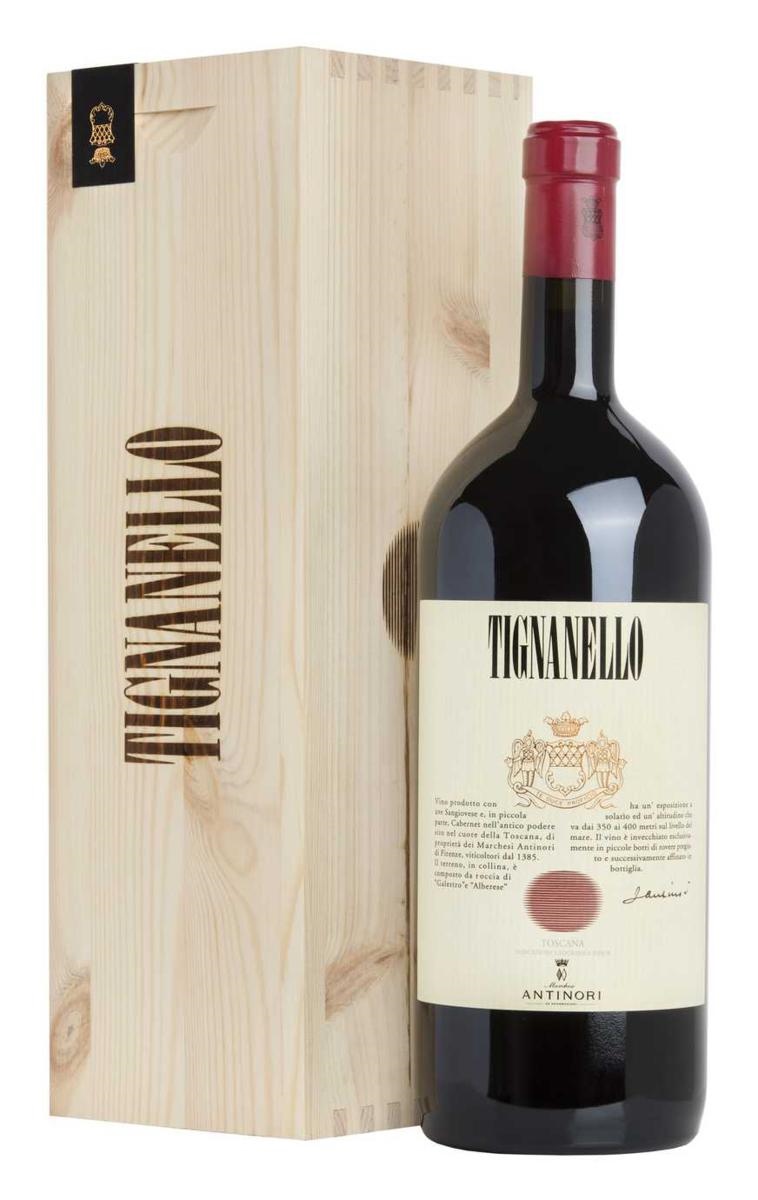
TOSCANA ROSSO IGT 2005 TIGNANELLO LT 1,500
TOSCANA ROSSO IGT 2005 TIGNANELLO LT 1,500
€ 750,00
Code
ANTINORI160
Alternative Code:
8888525636650
Goods Category:
Tuscany
Unit of Measurement:
NR
Vintage:
2005
Producer:
ANTINORI
Grape variety:
80% Sangiovese, 5% Cabernet Franc, 15% Cabernet Sauvignon
-
PRODUCT INFORMATION
General Information: The Antinori family has been dedicated to winemaking for over six hundred years, ever since Giovanni di Piero Antinori joined the Florentine Winemakers' Guild in 1385. Through 26 generations, the family has always managed the business directly, making innovative and sometimes bold decisions while always maintaining an unwavering respect for tradition and the local area. Today, the company is led by Marchese Piero Antinori, with the support of his three daughters, Albiera, Allegra, and Alessia, who are directly involved in the business. Over time, the family's historic estates in Tuscany and Umbria have been joined by investments in other areas renowned for producing quality wines in Italy and abroad. Tignanello was the first Sangiovese to be aged in barrique, the first modern red blended with non-traditional varieties such as Cabernet, and among the first red wines in Chianti to use no white grapes. Tignanello, originally known as "Chianti Classico Riserva Vigneto Tignanello," was vinified for the first time from a single vineyard in 1970. Since 1982, the blend has remained the same as it is today. Tignanello is only produced in the best vintages; it was not produced in 1972, 1973, 1974, 1976, 1984, 1992, and 2002.
Production area: Tenuta Tignanello, home to the Tignanello and Solaia vineyards, located between the Greve and Pesa valleys, in the heart of Chianti Classico, between the small villages of Montefiridolfi and Santa Maria a Macerata, 30 km south of Florence.
Grapes used: Sangiovese 85%, Cabernet Sauvignon 10%, Cabernet Franc 5%.
Vinification: The climatic conditions during harvest require meticulous attention to selecting and selecting the finest grapes, especially for Sangiovese. After harvest, great care is taken during the fermentation and extraction phases, using frequent delestage and pumping over to achieve the best results in terms of color and tannins. For all three varieties, fermentation is conducted at an average temperature of 27°C, never exceeding 31°C, to maximize the aromatics and fruit character. After racking, which occurs once alcoholic fermentation is complete, the wines are transferred to new oak barriques to complete malolactic fermentation. The wines are then blended and placed in barriques for aging.
Aging: 12 months in oak barriques, 12 months in bottle before release.
Wine characteristics: On the eye, it is clear, a very intense ruby ??red color with light garnet highlights, and consistent. On the nose, it is intense, complex, and quite refined, with well-expressed varietal aromas, fruity notes of ripe black berries; spicy notes of black pepper, vanilla, cloves, tobacco, cocoa, roasted coffee, licorice, and leather; and ethereal notes of eucalyptus and menthol. On the palate, it is dry, warm, quite soft, and quite fresh, with tannins smoothed by the oak aging but still present. It is quite savory, full-bodied, balanced, intense, and has a long finish. Overall, it is powerful and elegant.
Food pairings: game, roasts, stewed and braised meats, leg of kid in wine.
Alcohol content: 13.5% vol.
Serving temperature: 18-20°C.
Production area: Tenuta Tignanello, home to the Tignanello and Solaia vineyards, located between the Greve and Pesa valleys, in the heart of Chianti Classico, between the small villages of Montefiridolfi and Santa Maria a Macerata, 30 km south of Florence.
Grapes used: Sangiovese 85%, Cabernet Sauvignon 10%, Cabernet Franc 5%.
Vinification: The climatic conditions during harvest require meticulous attention to selecting and selecting the finest grapes, especially for Sangiovese. After harvest, great care is taken during the fermentation and extraction phases, using frequent delestage and pumping over to achieve the best results in terms of color and tannins. For all three varieties, fermentation is conducted at an average temperature of 27°C, never exceeding 31°C, to maximize the aromatics and fruit character. After racking, which occurs once alcoholic fermentation is complete, the wines are transferred to new oak barriques to complete malolactic fermentation. The wines are then blended and placed in barriques for aging.
Aging: 12 months in oak barriques, 12 months in bottle before release.
Wine characteristics: On the eye, it is clear, a very intense ruby ??red color with light garnet highlights, and consistent. On the nose, it is intense, complex, and quite refined, with well-expressed varietal aromas, fruity notes of ripe black berries; spicy notes of black pepper, vanilla, cloves, tobacco, cocoa, roasted coffee, licorice, and leather; and ethereal notes of eucalyptus and menthol. On the palate, it is dry, warm, quite soft, and quite fresh, with tannins smoothed by the oak aging but still present. It is quite savory, full-bodied, balanced, intense, and has a long finish. Overall, it is powerful and elegant.
Food pairings: game, roasts, stewed and braised meats, leg of kid in wine.
Alcohol content: 13.5% vol.
Serving temperature: 18-20°C.
REVIEW THE PRODUCT
Login to read the reviews and write your own -- Proceed to LOGIN
RECENTLY VIEWED


