


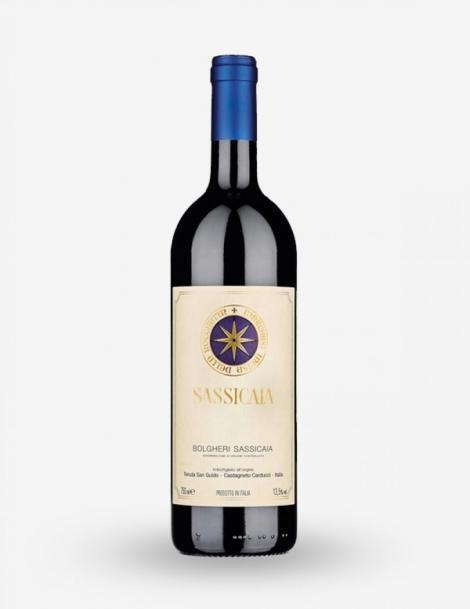
BOLGHERI SASSICAIA DOC 2023 TENUTA SN GUIDO 0,750
BOLGHERI SASSICAIA DOC 2023 TENUTA SN GUIDO 0,750
€ 440,00
Code
TENUTASANGUIDO152
Alternative Code:
8885545632532
Goods Category:
Tuscany
Unit of Measurement:
NR
Vintage:
TENUTA SAN GUIDO
Producer:
2023
Grape variety:
CABERNET SAUVIGNON E CABERNET FRANC
-
PRODUCT INFORMATION
APPELLATION
Bolgheri DOC Sassicaia
FIRST VINTAGE ON SALE
1968
GRAPE VARIETY
Cabernet Sauvignon and Cabernet Franc
Bolgheri Sassicaia
SOIL TYPE
The soils are within the Bolgheri Sassicaia DOC production area. They exhibit diverse and complex morphological characteristics, with the presence of calcareous areas rich in marl, as well as stony and pebbles (from which the wine takes its name), and partial clay. The production facilities are located at an average altitude between 100 and 400 meters above sea level, with a west/southwest exposure.
THE SEASON IN BRIEF
The 2023 vintage was hot, but Bolgheri's favorable microclimate allowed for a good balance between acidity and freshness.
Autumn initially saw temperatures below average, with abundant rainfall and a drop in temperatures in late November, which favored a vegetative shutdown of the plants and the natural elimination of pests. Rain continued into winter, ensuring good water reserves. Spring began with above-average temperatures, interrupted by a brief, sudden drop in temperature that led to bud selection in early vineyards. This reduced plant load and allowed for proper pigmentation and ripening of the grapes. Summer was characterized by intense heat, but thanks to Bolgheri's microclimate and the vineyards' hillside location, there were no signs of distress in the vineyards. A significant rainfall in mid-August caused a drop in temperatures and consequently favored proper ripening of the grapes. The result of this climate is a perfect balance between technical and phenolic maturity, with healthy grapes and excellent lignification of the seeds and stems.
THE HARVEST
The hand-picked grapes began in early September with the grapes from the youngest vineyards, then continued with the Cabernet Sauvignon from the lower-altitude vineyards, and finally concluded with the hillside vineyards over 300 meters above sea level (Castiglioncello Vineyard). Harvesting operations concluded at the end of September.
THE WINE
After careful selection of the grapes, they are gently pressed and undergo controlled alcoholic fermentation, concluding at the end of October. Macerations were moderate, lasting 13 to 18 days, resulting in optimal extraction of polyphenols and aromas. After spontaneous malolactic fermentation, which concluded at the end of November, the wine aged in wood for approximately 23 months. It was then racked into stainless steel tanks for the final selection phase before blending.
Bolgheri DOC Sassicaia
FIRST VINTAGE ON SALE
1968
GRAPE VARIETY
Cabernet Sauvignon and Cabernet Franc
Bolgheri Sassicaia
SOIL TYPE
The soils are within the Bolgheri Sassicaia DOC production area. They exhibit diverse and complex morphological characteristics, with the presence of calcareous areas rich in marl, as well as stony and pebbles (from which the wine takes its name), and partial clay. The production facilities are located at an average altitude between 100 and 400 meters above sea level, with a west/southwest exposure.
THE SEASON IN BRIEF
The 2023 vintage was hot, but Bolgheri's favorable microclimate allowed for a good balance between acidity and freshness.
Autumn initially saw temperatures below average, with abundant rainfall and a drop in temperatures in late November, which favored a vegetative shutdown of the plants and the natural elimination of pests. Rain continued into winter, ensuring good water reserves. Spring began with above-average temperatures, interrupted by a brief, sudden drop in temperature that led to bud selection in early vineyards. This reduced plant load and allowed for proper pigmentation and ripening of the grapes. Summer was characterized by intense heat, but thanks to Bolgheri's microclimate and the vineyards' hillside location, there were no signs of distress in the vineyards. A significant rainfall in mid-August caused a drop in temperatures and consequently favored proper ripening of the grapes. The result of this climate is a perfect balance between technical and phenolic maturity, with healthy grapes and excellent lignification of the seeds and stems.
THE HARVEST
The hand-picked grapes began in early September with the grapes from the youngest vineyards, then continued with the Cabernet Sauvignon from the lower-altitude vineyards, and finally concluded with the hillside vineyards over 300 meters above sea level (Castiglioncello Vineyard). Harvesting operations concluded at the end of September.
THE WINE
After careful selection of the grapes, they are gently pressed and undergo controlled alcoholic fermentation, concluding at the end of October. Macerations were moderate, lasting 13 to 18 days, resulting in optimal extraction of polyphenols and aromas. After spontaneous malolactic fermentation, which concluded at the end of November, the wine aged in wood for approximately 23 months. It was then racked into stainless steel tanks for the final selection phase before blending.
REVIEW THE PRODUCT
Login to read the reviews and write your own -- Proceed to LOGIN
RECENTLY VIEWED


