


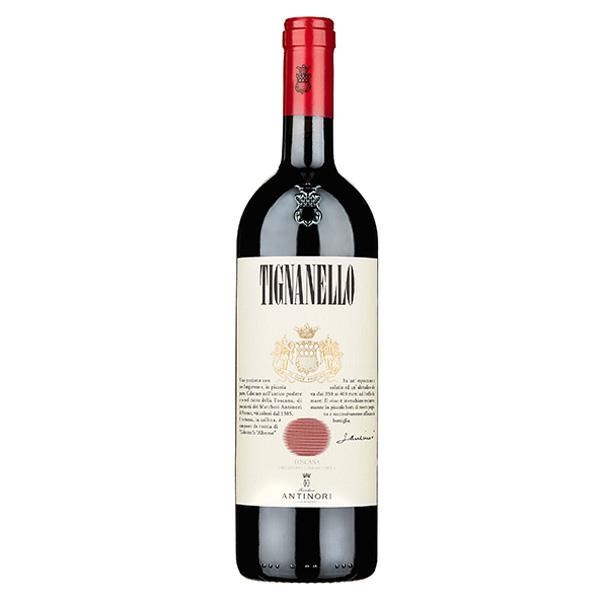
TOSCANA ROSSO IGT 1987 TIGNANELLO LT 1,500
TOSCANA ROSSO IGT 1987 TIGNANELLO LT 1,500
€ 590,00
Code
ANTINORI536
Alternative Code:
8888158575746
Goods Category:
Tuscany
Unit of Measurement:
NR
Vintage:
1987
Producer:
ANTINORI
Grape variety:
SANGIOVESE, CABERNET SAUVIGNON, CABERNET FRANC
-
Out of Stock
PRODUCT INFORMATION
It was the first Sangiovese to be aged in barriques, the first modern red wine blended with non-traditional varieties (such as Cabernet), and among the first red wines in Chianti Classico to exclude white grapes. Tignanello is a milestone. It is produced from a selection of Sangiovese, Cabernet Sauvignon, and Cabernet Franc.
The Design
The label was designed by Silvio Coppola in 1974 for the release of the 1971 vintage. Coppola’s name came up during a dinner at Castello della Sala in 1973. A graphic artist and designer—renowned for his minimalist lamps and rigorous furniture designs, as well as the covers of many Feltrinelli books—Coppola was the perfect choice for the job.
The Signature
Marchese Piero Antinori decided to have the Tignanello label signed by his father, Niccolò Antinori, as a gesture of gratitude for the trust he had shown him.
Te Duce Proficio
The historic Antinori family coat of arms.
The Sun
The Tignanello “sun,” stylized by Silvio Coppola.
Vinification
As always, the weather conditions during the harvest required great care—both in the vineyard during picking and in the winery upon the grapes' arrival, where sorting and initial processing were crucial to achieving an optimal final result. During fermentation in truncated-cone tanks, the musts underwent maceration with a strong focus on preserving aromatics, extracting color, and managing the sweetness and elegance of the tannins. Devatting took place only after careful daily tastings. Once the skins were separated from the wine, malolactic fermentation was carried out in barriques to enhance the finesse and complexity of the aromas. The aging process took place in French oak barrels—and, to a very small extent, Hungarian ones—mostly new, for a total period of 13 months; following an initial aging phase in separate lots, the wines were blended to complete their maturation in wood. The wine, produced predominantly from Sangiovese grapes with a small proportion of Cabernet Sauvignon and Cabernet Franc, aged for a further 12 months in the bottle before its release to the market.
Historical Background
Tignanello is produced exclusively from the vineyard of the same name located on the Tignanello Estate; the 77-hectare site has a southwest exposure, calcareous soil with tuffaceous elements, and an altitude ranging between 350 and 400 meters above sea level. It was the first Sangiovese to be aged in barriques, the first modern red wine blended with non-traditional varieties (such as Cabernet), and one of the first red wines in Chianti to forgo the use of white grapes. Originally labeled "Chianti Classico Riserva Vigneto Tignanello," the wine was first produced from a single vineyard with the 1970 vintage—which contained 20% Canaiolo and 5% Trebbiano and Malvasia, and was aged in small oak barrels. With the 1971 vintage, it became a Tuscan *vino da tavola* (table wine) and was named Tignanello; by the 1975 vintage, white grapes had been completely eliminated. The blend composition has remained unchanged since 1982. Tignanello is produced only in the best vintages. It was not produced in 1972, 1973, 1974, 1976, 1984, 1992, or 2002.
Tasting Notes
Deep ruby ??red in color, the 2023 Tignanello strikes the nose with notes of ripe cherry, pomegranate, and orange, alternating with delicate hints of hibiscus and violet. The expansive bouquet continues with sweet spicy tones of cocoa and graphite, concluding with subtle touches of white pepper and redcurrant. On the palate, the vertical entry evolves into a juicy, enveloping mid-palate characterized by sweet, silky tannins. The finish is savory and persistent, marked by notes of blood orange and toasted hazelnut.
The Design
The label was designed by Silvio Coppola in 1974 for the release of the 1971 vintage. Coppola’s name came up during a dinner at Castello della Sala in 1973. A graphic artist and designer—renowned for his minimalist lamps and rigorous furniture designs, as well as the covers of many Feltrinelli books—Coppola was the perfect choice for the job.
The Signature
Marchese Piero Antinori decided to have the Tignanello label signed by his father, Niccolò Antinori, as a gesture of gratitude for the trust he had shown him.
Te Duce Proficio
The historic Antinori family coat of arms.
The Sun
The Tignanello “sun,” stylized by Silvio Coppola.
Vinification
As always, the weather conditions during the harvest required great care—both in the vineyard during picking and in the winery upon the grapes' arrival, where sorting and initial processing were crucial to achieving an optimal final result. During fermentation in truncated-cone tanks, the musts underwent maceration with a strong focus on preserving aromatics, extracting color, and managing the sweetness and elegance of the tannins. Devatting took place only after careful daily tastings. Once the skins were separated from the wine, malolactic fermentation was carried out in barriques to enhance the finesse and complexity of the aromas. The aging process took place in French oak barrels—and, to a very small extent, Hungarian ones—mostly new, for a total period of 13 months; following an initial aging phase in separate lots, the wines were blended to complete their maturation in wood. The wine, produced predominantly from Sangiovese grapes with a small proportion of Cabernet Sauvignon and Cabernet Franc, aged for a further 12 months in the bottle before its release to the market.
Historical Background
Tignanello is produced exclusively from the vineyard of the same name located on the Tignanello Estate; the 77-hectare site has a southwest exposure, calcareous soil with tuffaceous elements, and an altitude ranging between 350 and 400 meters above sea level. It was the first Sangiovese to be aged in barriques, the first modern red wine blended with non-traditional varieties (such as Cabernet), and one of the first red wines in Chianti to forgo the use of white grapes. Originally labeled "Chianti Classico Riserva Vigneto Tignanello," the wine was first produced from a single vineyard with the 1970 vintage—which contained 20% Canaiolo and 5% Trebbiano and Malvasia, and was aged in small oak barrels. With the 1971 vintage, it became a Tuscan *vino da tavola* (table wine) and was named Tignanello; by the 1975 vintage, white grapes had been completely eliminated. The blend composition has remained unchanged since 1982. Tignanello is produced only in the best vintages. It was not produced in 1972, 1973, 1974, 1976, 1984, 1992, or 2002.
Tasting Notes
Deep ruby ??red in color, the 2023 Tignanello strikes the nose with notes of ripe cherry, pomegranate, and orange, alternating with delicate hints of hibiscus and violet. The expansive bouquet continues with sweet spicy tones of cocoa and graphite, concluding with subtle touches of white pepper and redcurrant. On the palate, the vertical entry evolves into a juicy, enveloping mid-palate characterized by sweet, silky tannins. The finish is savory and persistent, marked by notes of blood orange and toasted hazelnut.
REVIEW THE PRODUCT
Login to read the reviews and write your own -- Proceed to LOGIN
RECENTLY VIEWED


